
Grip, Pour, Stack: The Real Work of Packaging Ergonomics
A container is handled thousands of times more often than it is admired. The geometry that makes it comfortable to carry, controlled to pour and safe to stack is decided at design time — and provable in a printed prototype before tooling.
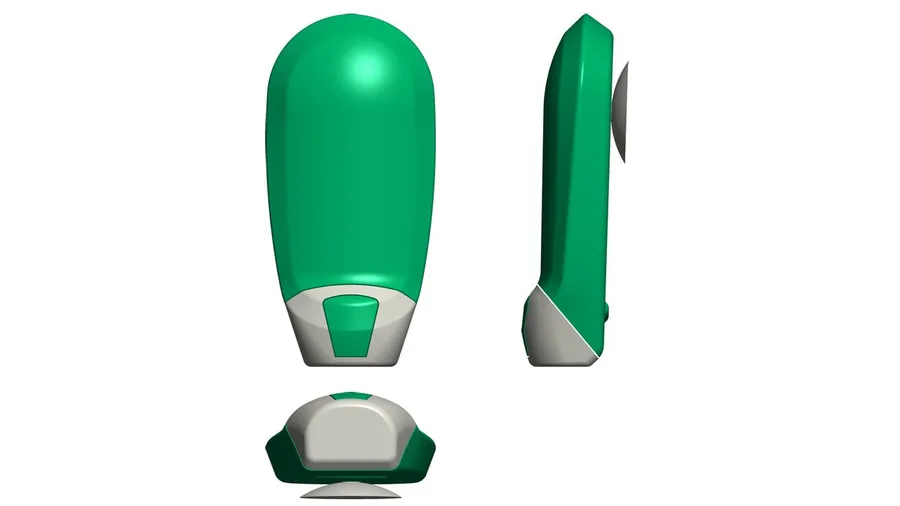
A container is looked at for a few seconds on a shelf. It is then gripped, carried, unscrewed, tipped, poured, set down and stacked — thousands of times, by hands of every size, in warehouses of every temperature. Packaging ergonomics is the discipline of designing for that second life, and nearly all of it is settled in geometry before a mold exists.
Where ergonomics is actually decided
Packaging ergonomics is the design of a container's geometry around the human body and the supply chain that handles it: a handle section shaped for real hands, a neck positioned so the pour stays controlled, bearing surfaces that carry stacked load without buckling. It is decided in CAD and validated in prototype, not discovered on the filling line. Advanced Molds Technologies treats it as structural engineering with a human load case, proven physically before any steel is cut.
A label is experienced once per purchase; the handle at every use.
Grip: a handle is a structure under load
A full 5-liter engine oil container weighs more than 4.5 kg, and all of it enters the hand through whatever cross-section the handle offers. The hand does not feel mass — it feels pressure, force divided by contact area. A thin handle turns a moderate weight into a blade across the fingers; a deeper, flatter section spreads the same force over more skin, and the container instantly feels lighter.
That is why an oval handle section beats a round one twice over. Curled fingers form an arch, and an oval lays a flat bearing surface along the middle segments of all four fingers; a circle meets each finger along a narrow line and concentrates the pressure there. And an oval set deep in the load direction is stiffer in bending — the same reason a floor joist stands on edge.
- Knuckle clearance: the window between handle and body must clear the knuckles of a large hand, not an average one. Too tight, and large hands take a two-finger grip on a 4.5 kg load — which is how containers get dropped.
- Texture where fingers land: a light moulded texture on the handle's inner face raises friction, so the hand needs less clamping force for the same security. On a handle, texture is function, not decoration.
We worked through this on a family of engine oil containers for a lubricants brand in the region — 5L, 4L and 1L designed as one system, with grip geometry developed to survive a target of roughly 12–16% less plastic. Less material makes ergonomics harder, not optional.
Pour: chasing a moving center of gravity
The moment a container tips, its center of gravity starts to migrate, and keeps migrating as long as liquid leaves. The wrist has to track it. Good geometry makes the shift gradual; bad geometry hides it until the pour surges.
Glugging has a specific mechanism. When the neck floods completely, air can no longer slide in above the stream — it must bubble back through the liquid, and every bubble interrupts flow. The pour pulses and splashes. Neck position and angle decide the outcome: a neck placed toward the pouring edge delivers with less rotation, starts the pour gently, and keeps an air path open deeper into the tip.
Posture is the other half. A 1-liter bottle is a one-handed pour. A full 5-liter is a two-handed operation — one hand on the handle, one steadying the base, which should give that hand something honest to hold. The hardest case is the constrained target: pouring into an engine bay filler neck while leaning over a fender. A container that glugs in that posture puts oil on the manifold.
Stack: load paths, interlocks and hot warehouses
A stacked container is a column, and columns care about load paths: weight must travel down through walls to the base, never through unsupported panels that flex and let the column lean.
- Defined bearing areas: the base of one container should meet the shoulder or closure of the one below on surfaces designed to touch. Contact that lands mid-panel is a collapse waiting for a hot day.
- Interlock features: a base recess that registers on the closure or shoulder below keeps columns vertical as the pallet moves. Interlock is cheap in the mold and expensive to live without.
- Palletization: a footprint that tiles a standard pallet is freight efficiency designed in. Air on a pallet ships at the same rate as product.
- Height limits: the bottom container carries everything above it, and plastic under sustained load creeps; the bottom row sets the honest stacking limit.
Heat multiplies all of it. HDPE loses stiffness as temperature climbs, and a GCC warehouse in August is a different structural environment from a laboratory at 23°C. A stack that passes a European test protocol can slump in a Gulf summer. Stacking margins are designed against the hottest month, not the average.
The triangle: premium, comfortable, stackable
The three demands pull against each other. A premium silhouette wants slender shoulders, tight radii and the long uninterrupted surfaces that make packaging read as expensive. Grip wants a wide handle window and a deep section cutting into that silhouette. Stacking wants broad, flat bearing rings where the premium profile wants a taper.
Resolving the triangle is the actual design work. The answer is rarely a compromise; it is one feature doing two jobs: an interlock ring that reads as a design line, structural ribs patterned into brand texture, a handle that blends into the shoulder and stiffens it. When it works, nobody can point to where ergonomics ends and styling begins.
Why a printed prototype ends the argument
Ergonomics is the one part of container design a render cannot judge. A screen cannot say whether knuckles clear or the pour surges at 40 degrees. That is why the prototype stage of our design process exists: a 3D-printed container puts proportions, grip, pouring and stacking into hands before tooling is committed. Five minutes of holding settles arguments that weeks of meetings cannot.
Packaging ergonomics, answered
What makes a container comfortable to carry?
Contact area and load position. A deep oval handle section spreads the weight across the flat of the fingers, and a handle placed near the full container's center of gravity lets the load hang instead of twisting the wrist. Knuckle clearance and texture where fingers land complete it.
What makes bottles stackable?
A continuous load path. Weight must travel down through the walls of the container below, meeting on bearing surfaces designed to touch, with interlocks keeping the column aligned. The practical height limit is what the bottom row can carry at real warehouse temperature — in the Gulf, far above laboratory conditions.
Why does a full 5L bottle feel heavier than it actually is?
Because hands sense pressure and torque, not mass. A narrow handle concentrates more than 4.5 kg onto thin lines of skin, and a handle offset from the center of gravity adds a twisting moment the wrist must resist. Both are geometry faults: the same weight through a deep, well-placed section feels manageable.
When is a handle worth the extra mold complexity?
As an industry rule of thumb, when full weight passes roughly 2–3 kg or the product is poured often into a precise target. An integral blow-moulded handle complicates the parting line and trimming, so it costs tooling effort — but on 4L and 5L containers it usually decides usability, and usability decides repurchase. Below one liter it is rarely worth the steel.
Designed in, not added on
If your next container has to be carried, poured and stacked as well as it looks, prove it before tooling.
Advanced Molds Technologies is a precision mold maker and product design house in Amman, Jordan, serving Saudi Arabia, the GCC and the wider MENA region — design, simulation, prototyping and mold trials under one roof. Ergonomics is designed in from the first sketch through our packaging product design services.


