How a Product Design House Works: From Brief to 3D-Printed Prototype
A product design house exists to make expensive mistakes cheap: a constraint list before any shape, three concepts before one commitment, and a 3D-printed prototype before any steel.
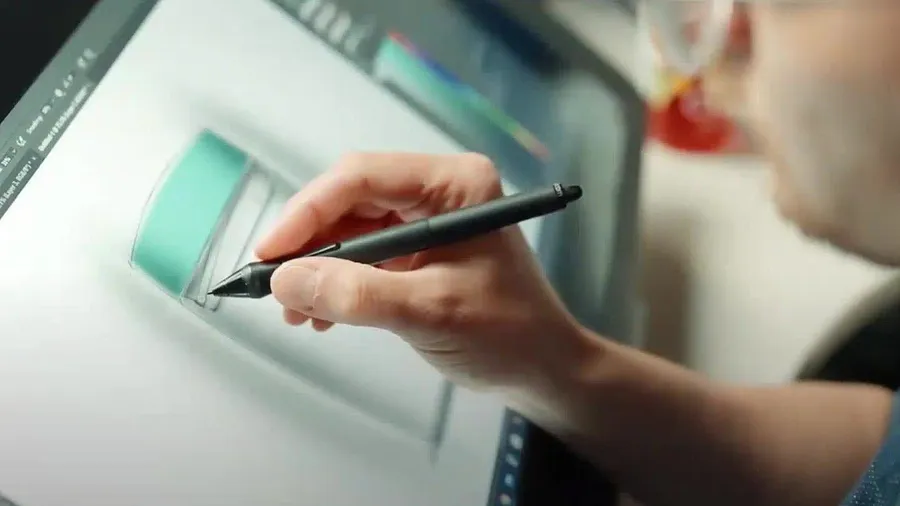
Most containers on a shelf were never designed. They were inherited — the shape the line already ran, the weight the old mold produced, a new label on old geometry. When a company designs a container deliberately, the product design process runs in distinct phases, each built to kill one category of expensive mistake before it reaches steel. Here is that sequence from the inside.
What a product design house actually does
A product design house develops the physical form of manufactured products — the geometry that will eventually be cut into a mold — rather than graphics, branding or software interfaces. For packaging, that means the shape, structure, weight, ergonomics and manufacturability of bottles, jerrycans, jars and closures, taken from a written brief to production-ready 3D geometry and a physical prototype. Advanced Molds Technologies runs its design house inside its mold factory in Amman, Jordan, so every surface a designer draws is checked against what a mold can actually produce.
“Design” is an overloaded word. A branding agency decides what the label says. An industrial design house decides what the label is stuck to: how thick the wall behind it is, whether the panel stays flat in the hand, whether the shoulder survives four layers of stacking in a hot warehouse. One discipline works in ink. The other works in polymer, and its mistakes get machined into steel.
Phase 1: direction — the constraint list is the brief
The first phase produces no shapes. It produces a list: the existing dimensions and weights of whatever the new design replaces, the market positioning it has to hold, the closure and neck standard it must keep so caps and filling lines do not change, and the production constraints — material, process, machines — it will be born into. That list is the real brief. A concept that ignores the filling line is not a design; it is a rendering with a deadline problem.
This phase looks slow because nothing visual comes out of it. It is the cheapest stage of the project. An argument about neck standards held here costs a meeting; the same argument held after steel is cut costs a mold revision and the weeks that come with it.
Phase 2: three concepts, one decision
The direction then becomes three alternative concepts for the whole family — not one, and not ten. One concept is a guess presented as a conclusion. Two is a coin flip. Three is the smallest number that forces genuinely different answers to the same constraints: one might chase grip and pouring behavior, another structural stiffness and stackability, a third the most material-efficient geometry the process allows. Each covers the entire family at once, so the 5-liter and the 1-liter read as siblings on the shelf, not strangers.
This is the stage where AMT’s AI concept generator earns its keep, turning a written brief into manufacturable 2D and 3D starting concepts. The client reviews the three directions and selects one. That selection is a decision with a date on it — which is precisely the point.
Phase 3: full industrial design
The selected concept is then developed into a container that can actually be manufactured. The refinement list is long, and every item on it is structural as much as aesthetic:
- Family harmonization: shared proportions and shoulder logic, so every size is recognizably the same product.
- Ergonomics: a handle sized for a real hand — sometimes a gloved one — and a controlled pour at full weight.
- Structural geometry: ribs, corner radii and shoulder transitions that carry top load, so wall thickness does not have to.
- Base and stacking: a base that lands stable on the conveyor and interlocks predictably on the pallet.
- Label panel: flat and stiff where the label lives, so it neither wrinkles at application nor buckles in the hand.
- Neck integration: the specified closure and neck built into the geometry, not bolted on at the end.
- Manufacturing detail: draft, transitions and radii the process can form without thin spots or trapped stress.
A recent engagement for a lubricants brand in the region shows what this phase is worth: a family of 5L, 4L and 1L engine oil containers, typically produced at around 250, 240 and 80 grams, developed toward targets of 210, 200 and 70 — roughly 12–16% less plastic, found in geometry rather than naive thin-walling. The full worked example is on this blog.
What a prototype knows that a render does not
Before any tooling, the developed design is 3D printed. The step looks optional. It never is: a render is always viewed at the wrong size, from a flattering angle. A one-to-one physical object answers the questions that decide repurchase: does the handle sit in the palm or dig into it, does the container pour without lurching, do two units stack square, does the 5-liter read as generous or merely bloated beside its competitors. Proportion, grip, pouring, stacking — a moulded container lives or dies on these, and all four are testable for the price of a print.
A prototype that fails costs days. A mold that embodies the same failure costs a revision to finished steel. The prototype is the last cheap place to be wrong.
Why the design house lives inside the mold factory
The common model is a packaging design company in one country and a toolmaker in another, connected by a file transfer. Every handoff loses intent: the toolmaker opens a radius the designer meant, thickens a wall that was doing its work through shape — each change locally reasonable, collectively fatal. Nobody is wrong. Nobody owns the result either.
When design and mold making share a roof, the design is interrogated before it is frozen. At AMT, geometry is proven in simulation — flow, cooling, wall thickness, top load and drop — before steel is cut, and the machinists who will cut the mold sit within walking distance of the designers. For customers across Jordan and the wider MENA region, the result is simple: the design and the mold are one argument, not two documents passed between companies.
The product design process, answered
What does a product design house do?
A product design house develops the physical form of manufactured products — for packaging, the shape, structure, weight and ergonomics of bottles, jerrycans, jars and closures — from brief to production-ready 3D geometry. The output is not artwork. It is geometry a mold can be built from, validated with a physical prototype before tooling.
How long does packaging product design take?
For a container family, typically weeks rather than months: direction settled first, three concepts shortly after, then full development and a 3D-printed prototype in the weeks that follow. The honest caveat: the calendar is usually governed by client decision speed, and by the tooling that follows, which takes longer than the design itself.
What do you receive at the end of the design process?
Three alternative concepts for the family, the selected concept developed into full industrial design, a 3D-printed prototype, and manufacturing-ready 3D geometry that mold design can start from directly. Final weights are confirmed in mold and production trials, because they depend on material, machine, mold and process together.
Why get design and mold making from the same company?
Because every handoff between a design agency and a toolmaker loses intent: radii get opened, walls get thickened, and no one owns the container that results. When one company does both, the geometry is proven against flow, cooling and wall-thickness simulation before steel is cut, and a single team answers for what comes off the line.
Where the process starts
A brief is enough to start Phase 1. So is a competitor’s container and a target weight.
Advanced Molds Technologies is a precision mold maker and product design company in Amman, Jordan, serving Jordan, Saudi Arabia, the GCC and the wider MENA region in Arabic and English. Design house and mold shop work under one roof, so the process above ends the way it should: with a container in production, not a folder of renderings.


