
Mold Making and Design for Construction Plastics
Nobody photographs a pipe fitting. It just has to hold for thirty years, buried in a wall, under pressure, which makes construction plastics one of the least forgiving things a toolroom can be asked to build.
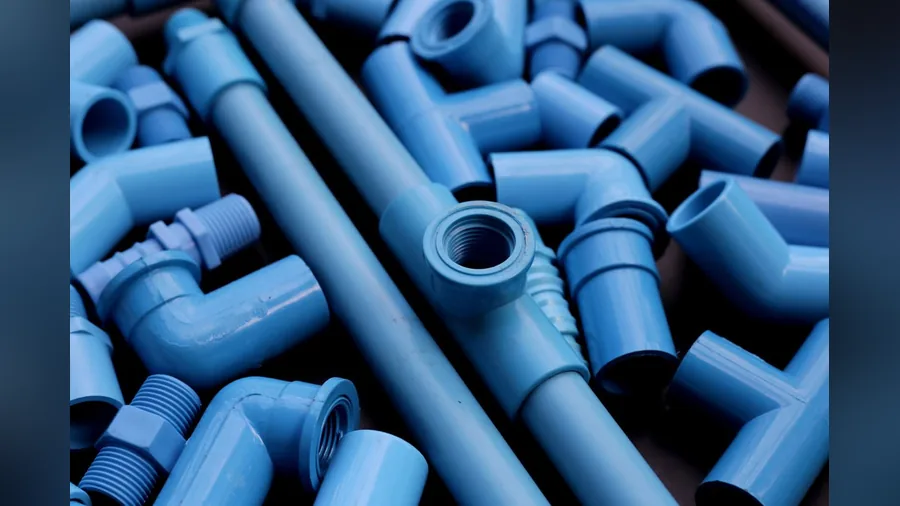
Consumer packaging fails politely. A bottle that panels slightly is a complaint, a return, an embarrassing photo. A construction component fails in a wall, ten years after anyone remembers who supplied it, and takes the ceiling below it with it. The engineering is not harder than packaging. It is harder to walk back.
Fittings, junction boxes, conduit, profiles, valve bodies, brackets: the category is unglamorous and technically merciless. Here is what it changes about the tool.
The part has to survive its own lifetime
Packaging is designed for months. Construction plastics are designed for decades, and the failure modes are cumulative rather than immediate: creep under sustained load, UV embrittlement, thermal cycling, chemical attack from whatever is actually running through the pipe.
None of that shows up in a first-article inspection. A part can pass every dimensional check on day one and still be wrong, because the thing that will kill it is a residual stress frozen into a thick section during cooling. Which means the mould, through gate location, cooling balance and hold pressure, is not just producing the geometry. It is producing the internal state of the material, and that internal state is what has to last thirty years.
Thick sections change the physics
Most packaging is thin-walled, and thin walls cool predictably. Construction components are frequently chunky: a valve body or a heavy fitting can have wall sections many times what a bottle ever sees.
Thick sections shrink more, shrink unevenly, and trap heat. Left alone they produce sink marks, voids and locked-in stress exactly where the part is meant to be strongest. The tooling answers are old and unfashionable: coring out, ribbing to carry load with less mass, and deliberate gate placement so the thick section stays fed while it solidifies. They only work if they are designed in at the start. You cannot rib a part after the steel is cut.
Tolerance is a sealing problem
A fitting is an interface. It has to seal against a pipe from another supplier, made on another continent, to a standard that both parties claim to meet. The tolerance that matters is not the one on your drawing. It is the accumulated stack across two parts, a gasket, an installer's torque wrench, and thirty years of thermal movement.
Multi-cavity tooling makes this sharper. If a tool runs sixteen cavities, all sixteen have to produce the same part, not sixteen parts that each individually pass. Cavity-to-cavity consistency comes from balanced filling, matched cooling and machining every cavity to the same number in the same toolroom, which is precisely why we do not subcontract cavity work.
Standards are the specification
In FMCG the brief is a brand. In construction the brief is a standard, and it is not negotiable. Dimensional conformity, pressure rating and material certification are the product. The tool has to be documented and traceable because someone will eventually ask which cavity produced a specific part.
That suits how we work. Engineering, machining and validation happen under one roof, with traceability from the first drawing to the first article, not as a compliance exercise but because it is the only way to answer the question honestly when it comes.
Unglamorous is the point
There is no shelf appeal in a conduit box. Every gram of engineering goes into a part nobody will look at, which is exactly why it is satisfying work: the only reward is that it does not fail. If you are developing construction components and want the tooling engineered rather than quoted, . Bring a drawing, a sample, or the standard you have to meet.
Advanced Molds Technologies engineers and builds packaging tooling in Amman, Jordan, serving brands across Saudi Arabia and the GCC. If this piece is close to a problem on your line, our injection molds for construction plastics are where to start.


