
How Much Does a Mold Cost? Price Drivers and Lead Times, Answered
A mold has no list price — seven drivers write it, and what a quotation includes matters as much as the number on it. Here is how to read a mold quote, and where the weeks of lead time actually go.
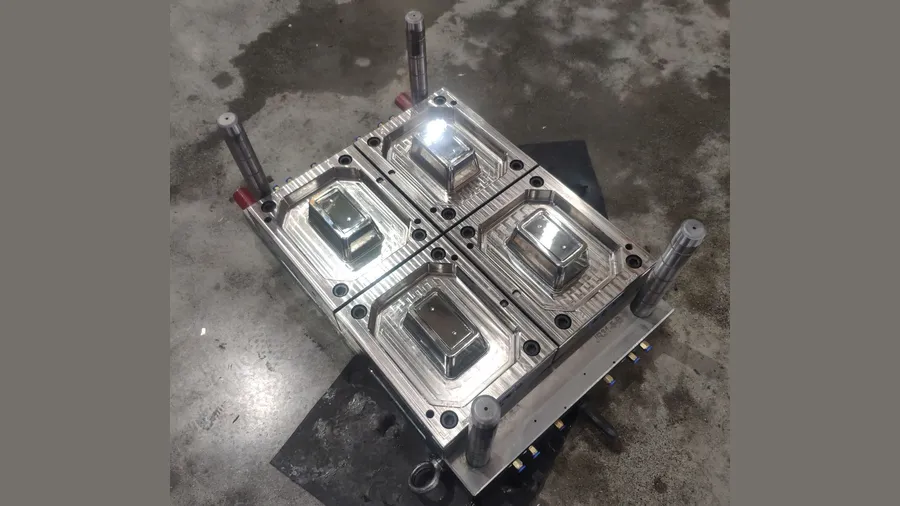
"How much does a mold cost?" is the first question every molded-product project asks, and the one no honest mold maker can answer with a single number. A mold has no list price. It is a machine built around one part, and the part writes most of the invoice before any supplier does.
The honest answer first
There is no single mold cost. Across the industry, a small single-cavity tool for a simple part starts in the low thousands of dollars, while a large multi-cavity production mold in hardened steel, fully sampled and polished, runs well into six figures. Those are industry rules of thumb, not any supplier's price list — and the spread is not vendor mischief. It is seven drivers, and once you can name them, you can read a quotation instead of merely receiving one.
The seven drivers of mold cost
- Part size and complexity: a larger part needs a larger block of steel, more machining hours, more surface to fit and polish. Complexity multiplies rather than adds: an undercut needs a slide, a thread needs an unscrewing mechanism, and every moving element is a small machine inside the big one.
- Cavitation: a four-cavity mold costs well under four times a single cavity, but the real multiplier is precision, not steel. Four cavities must fill, cool and release identically, or the worst one sets the scrap rate. Sixteen means sixteen matched insert sets and a balanced feed system.
- Mold material: aluminium machines fast and wears fast; pre-hardened steels like P20 are the general-purpose middle; fully hardened tool steel costs more to machine and heat treat but shrugs off millions of cycles. You are not buying metal. You are buying lifetime.
- Process type: EBM, injection and ISBM tooling are expensive in different places. An extrusion blow mold is mostly cavity, so cost concentrates in pinch-offs, neck and base inserts and cooling. An injection mold must seal against melt at hundreds of bars, so cost sits in fits, tolerances and ejection. ISBM buys two tooling disciplines at once. The differences between EBM, injection and ISBM molds are worth understanding before comparing quotes.
- Surface finish: a moulded surface is a print of the steel, so every scratch you do not want on the part must first be polished out of the cavity, by hand, grade by grade. A textured jerrycan and a glass-clear PET bottle can be similar machining jobs and very different polishing bills.
- Expected production volume: volume decides material, cavitation and how ambitious the cooling should be. A mold for fifty thousand parts and one for five million are different machines, even for an identical part.
- Validation scope: sampling, trials, dimensional reports and documented process settings cost machine time and engineering hours. A mold that arrives with proven parts costs more than one that arrives in a crate — and is worth more.
Why two quotes for the same part differ threefold
Send one 3D model to three mold makers and the quotes can differ threefold. Some of that is capability and overhead; most is scope. A mold price can include — or quietly exclude — design, simulation, sampling, trials, spare parts, a warranty measured in cycles, and a policy for the modifications every new mold needs. A cheap quote that excludes sampling is not cheap. It is a deferred invoice, payable after the steel is cut and your leverage is gone.
The test is one question: what happens if the first samples are out of specification? A supplier who has priced trials and corrections answers in a sentence. One who has not answers with a change order.
Where the lead time actually goes
Industry-wide, a typical production mold takes several weeks to a few months from order to approved samples. The time is a chain, not one long machining job. Design and simulation come first — flow, cooling, wall thickness — because an error caught in software costs hours and the same error in steel costs weeks. Then material procurement — specific tool steels can mean waiting on a mill. Then machining and heat treatment; then fitting and assembly, where the mold becomes a machine; then trials and usually one correction loop. The stages are traced in how a mold is actually built. What compresses mold lead time is rarely faster machining — it is fewer surprises per stage, which makes the simulation days the cheapest days of the project.
The line item no quotation shows
For buyers in Saudi Arabia and the wider GCC, the real tooling cost includes a category no quotation lists: distance. Freight for a heavy tool, flights for every support visit, and a round trip for every modification — no production mold is finished until after its first corrections. When the mold maker is ten time zones away, each correction is a shipping event. When the mold is built in Amman, Jordan, one border from Saudi Arabia, it travels by road in days, an engineer can stand at the customer's machine within the same week, and support runs in the customer's language and time zone. That arithmetic is laid out in the case for serving the GCC from Amman; across MENA, it is why a regional quote can beat a cheaper distant one.
How to brief a mold maker so the quote is real
A quotation is only as good as the brief behind it; ambiguity gets priced, as padding or as future change orders. Send six things:
- Part model or sample: a 3D model is best; a sample of the current part with target weights works.
- Material: HDPE, PP and PET shrink and wear tooling differently. A cavity is cut for one resin's shrinkage, not for plastic in general.
- Machine: platen dimensions, tie-bar spacing and clamp force set the mold's outer envelope before design begins.
- Neck standard: the neck must mate with a closure that already exists; naming the standard removes a category of expensive surprise.
- Annual volumes: this one number drives material, cavitation and cooling ambition — most of the price.
- Target cycle time: a faster mold costs more once and earns it back on every shot.
Mold cost and lead time, answered
How much does an injection mold cost?
Industry-wide, a small single-cavity injection mold starts in the low thousands of dollars; mid-size production tools run in the tens of thousands; large or high-cavitation molds in hardened steel reach six figures. The drivers are part size and complexity, cavity count, steel, surface finish and how much validation is included. Compare quotes on scope, not just the bottom line.
How long does it take to build a mold?
A typical production mold takes several weeks to a few months from order to approved first samples. Cavitation, complexity, steel procurement and the number of trial-and-correction loops move the schedule most. Design and simulation up front usually shorten the total by removing correction loops at the end, where delay is most expensive.
Should I choose an aluminium or a steel mold?
Choose by production life. Aluminium machines quickly and cools well, suiting prototypes and low volumes, but wears fast. Pre-hardened steels like P20 handle mid volumes; fully hardened tool steel is for millions of cycles or abrasive materials. Buying more lifetime than the product will use is as wasteful as buying less.
What should a mold quotation include?
A complete quotation covers design, molding simulation, the tool itself, sampling and trials, first-article documentation, spares for wear items, a warranty defined in cycles, and a policy on post-trial modifications. Anything missing has not disappeared — it has moved into a future change order.
Getting a quotation you can read
A part, a sample or just a target weight is enough to start.
Advanced Molds Technologies is a mold manufacturer in Amman, Jordan, building EBM, injection, ISBM and PET blow molds — engineering, simulation, machining, polishing and mold trials under one roof — for customers across Jordan, Saudi Arabia, the GCC and the wider MENA region. Send the six checklist items, in Arabic or English, and the quotation that comes back will be one you can read.


